
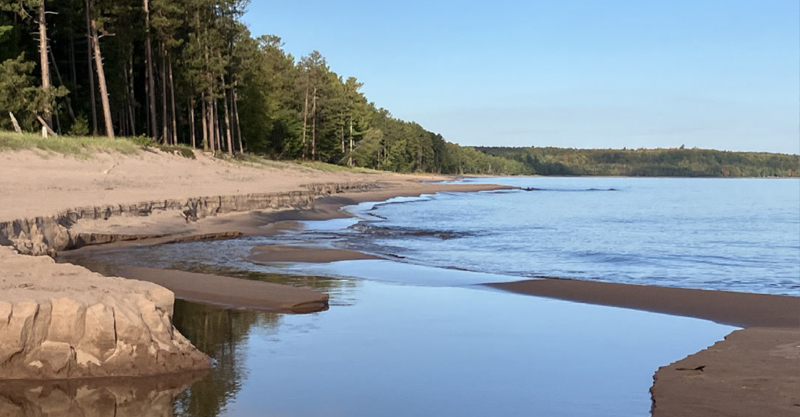
I’m sitting this afternoon with a retired university football coach on his home patio. Framed by stands of red pine, we’re less than a hundred yards distant from the shores of Lake Superior. My friend had no ordinary career.
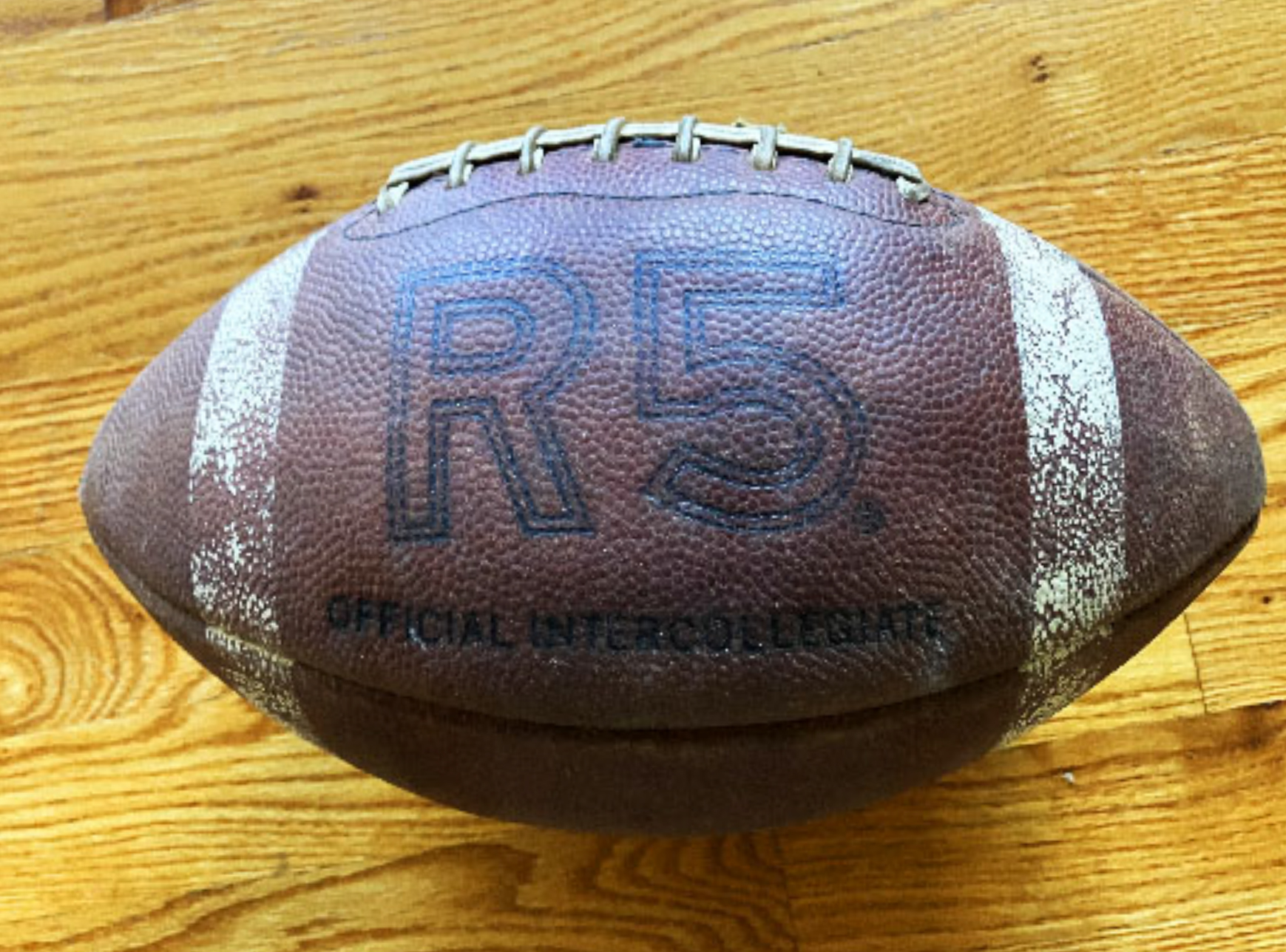
Raised on a dairy farm in Wisconsin, he’s the father of two daughters, one who died unexpectedly as a young adult. His wife of over sixty years is recently deceased. A former collegiate athlete himself, as a member of the coaching staff in 1975, he led our local university‘s football team to a Division II National NCAA championship. It was an astonishing effort culminating in a legendary victory. It came after a prior season of not winning a single game.
We spend time reflecting on his experience coaching players. Some “played to win.” Others who played because “they loved the game.” Scoreboards, we both agree, are incapable of measuring such differences..
I mention a Sports Illustrated Magazine article about a player in the National Basketball League, who was known, upon being called up from the bench, to consistently lead his teammates to consecutive victories. Initially, no one could figure it out. That particular player wasn’t much of a scorer, had few “assists,” and rarely drew any attention from fans or his team’s opponents.
Thanks to sophisticated computer technology, the secret was found. It turned out this athlete was playing a hidden game, not visible to observers or even professional coaches. It involved an uncanny ability to move among teammates and opponents, ever so slightly, disrupting patterns, making space for others. With exceptional instincts, he knew how to pass the ball just at the right time, encourage team members with nonverbal signals, provide subtle moves allowing his teammates to use their best skills at exactly the right time.
This afternoon, the retired coach and I remember a student who once played for our university’s basketball team sixty years ago. He came from a small rural Michigan town. We both appreciated him as a natural leader. An extraordinary one. One year, his teammates elected him as their captain. He never was a starting player. His actual playing time during games was minimal.
There are different scoreboards in life. Who is on a winning team actually depends on what game you are playing. Both of these men – one a retired football coach – the other a basketball team captain who, decades ago, never started a university basketball game, started a men’s study group thirty years ago on Friday mornings at our local faith community. It’s still going.
The conversation today leaves me with a couple of questions. What game am I playing? What scoreboard am I looking at? I invite you, the reader, to ask yourself the same questions. Our answers will make a difference.
Fall 2025 Equinox Newsletter
CONTENTS
JOURNAL NOTES
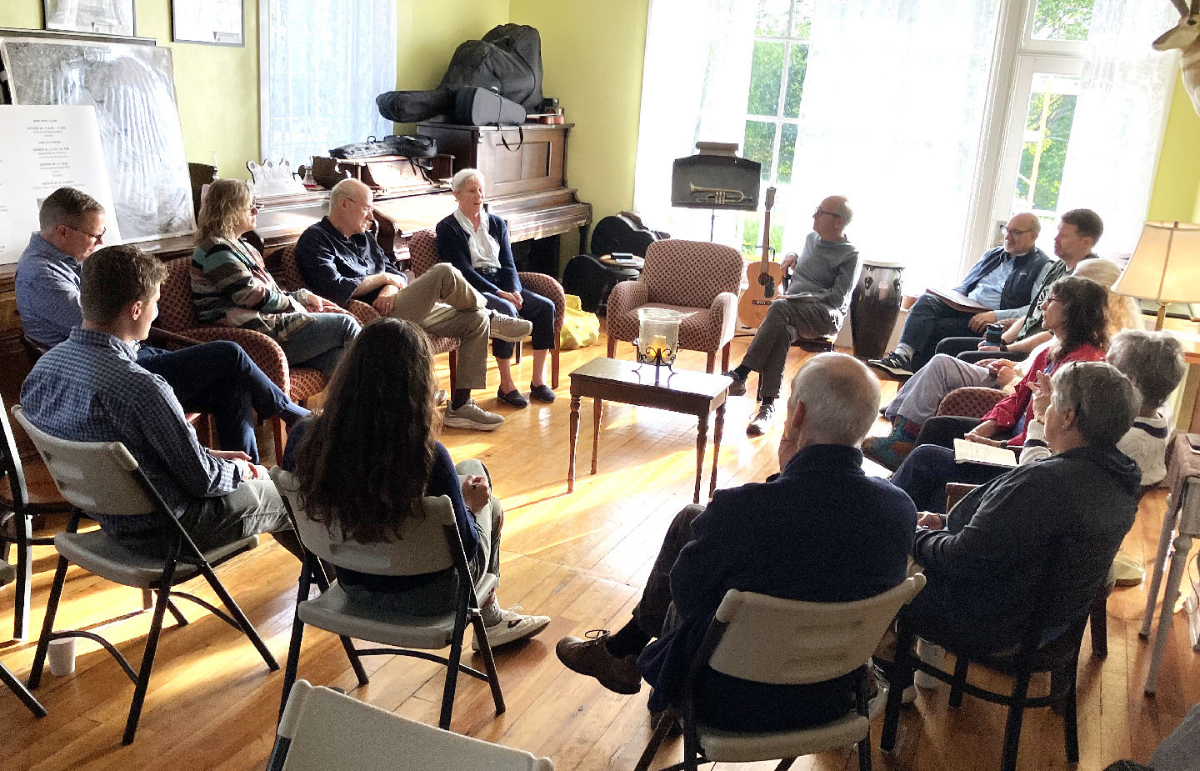
The Institute’s 2026 Coming Home Project completed the third of a 4-part series of public presentations and workshops. This initiative welcomed Greg Fricchione and his wife Kathy. Both joined us in September as a part of CTI’s efforts to support physicians, on-the-ground hospice workers and volunteers in Michigan’s Upper Peninsula. Greg is Director of the Benson Henry Institute for Mind Body Medicine and serves on the faculty of Harvard Medical School.
Participants shared their experiences and reflections on providing care for families and individuals facing the end of life, often in remote and rural settings. There were no distinctions between professional roles among us. We sang together, discussed difficult case studies, shared our struggles and insights.
Previous guest presenters for this project included Sophina Calderon, Medical Director for the Keweenaw Bay Indian Community’s Tribal Health Department, and Larry Skendzel, palliative care physician/Hospice Director for the Gundersen Medical Center in La Crosse, Wisconsin.
Natalia Leonovitch, a researcher on levels of consciousness and near-death experiences, will join us from New York University for the last of this series on November 11-13th. An exploration of mystery and hope, what some choose to call “The Other Side.”
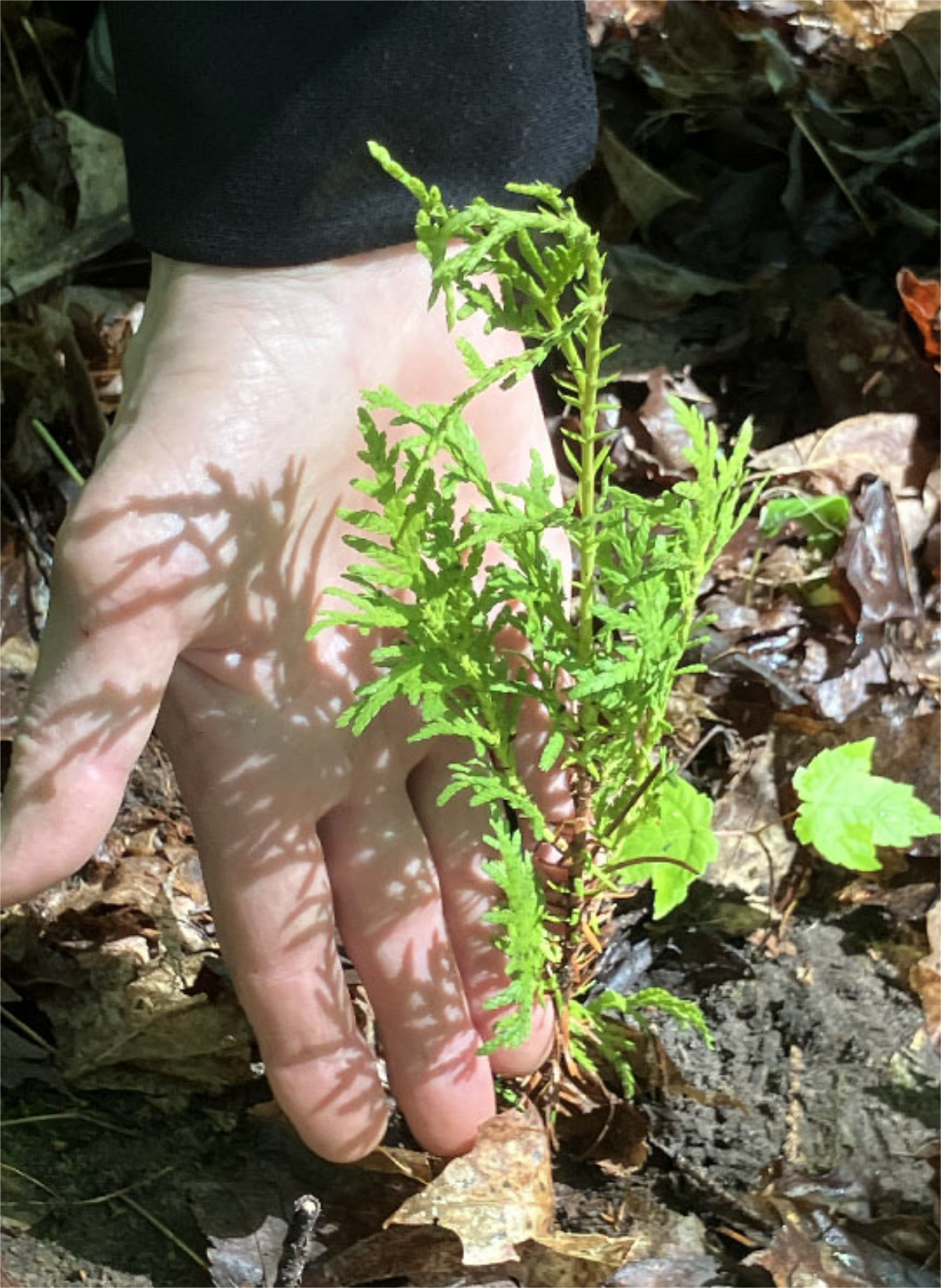
Our Forest Healing Initiative will continue its tree planting work in 2027, thanks to volunteers, faith communities, and over a hundred donations from individuals. This past summer 1,000 Northern white cedar trees were planted in Baraga and Marquette Counties. Partners included Wild Church, Messiah Lutheran Church in Marquette, the Native American community (KBIC) in Zeba, the Presbyterian Community Church in Big Bay, and Faith Lutheran Church in Marion, Iowa.

Transitions: In gratitude, we lift up the life of John Kiltinen (1942-2026), and offer blessings to Ruth Almén, Will Sharp, and Sarah Gimpl, all CTI friends and volunteers who, these days, are finding their way along new paths, discovering helpful signals on their life journeys.
REFLECTION
REBECCA ANN
I was preparing to leave the hospital, catch the next elevated commuter train back to Diana’s and my apartment on Chicago’s South Side, when I received the call for a chaplain on the intensive care unit (ICU). At that time, part of training for seminarians included 12 weeks in a clinical setting. Most frequently, placements were in nursing homes, psychiatric facilities, and prisons. My assignment was at a children’s hospital on the city’s North Side. A regional trauma and research center, then known for its state-of-the-art medical care and its newly constructed helicopter-landing pad on the hospital’s rooftop overlooking Lake Michigan. That afternoon I’d finished a week of work on a pediatric cancer ward. My other assignment was the ICU.
Moments later, I walked into a crowded room of computerized monitors, IV tubing, respirators, and sterilized incubators. The nurse spoke straight to the point. “We just received a phone call from the parents of five-week-old infant Rebecca Ann. They’ve requested she be baptized.”
The nurse’s implied expectation caught me off balance for a couple of reasons. I was struggling with a Christian tradition, heavy-weighted, by beliefs that still divide Protestant theologians and churches regarding infant baptism. At that time, I, shaped by theological studies, was becoming increasingly outspoken about what appeared to me and to others as an archaic cultural practice. One established primarily for institutional reasons: A subtle entrapment of children and infants, all who would later be told, without real choice, that they were now members of an all-encompassing institution. A spiritual blackmail of sorts. There’s plenty of history to back up such a view.
Another reason for my discomfort was that I’d distanced myself from the formal liturgical practices of the church during those particular seminary years in order to concentrate on the faith community’s commitments to social justice.
I had never officiated at a baptism. I knew little, if anything about rubrics of even how to conduct such a ritual. Furthermore, administration of “sacraments” in my own tradition, came under authority of ordained clergy, except for “emergencies.” I had no idea, at that time, what that might mean.
Given these circumstances, I addressed the nurse, stalling for time. “Let me make a few phone calls, grab a bite to eat. I’ll return later and we can make the necessary arrangements.” I began to head for the elevator. My real intention was to call a local Roman Catholic priest who, I assumed, would have no compunction for carrying out the family’s request. It would be a win-win solution. The child would be baptized. My conscience would remain intact.
But it was destined not to be so simple. As I turned, the nurse touched my elbow and said, “There won’t be time. Her name is Rebecca Ann. She could be gone at any moment.” The nurse passed me a discarded small plastic medication bottle, filled with water. “Use this.”
Looking for yet another way out, I asked, “What about the parents?”
“You need to understand something,” the nurse responded. “This little girl was born with a condition where her internal organs are not functional. Surgery, in such situations, is not an option. Her parents’ behavior is not all that unusual in these kinds of situations. It doesn’t get much worse than this. They know she’s dying. It’s their first and only child. They were here around the clock for the first three weeks. They couldn’t take it anymore.”
Except for the request for a baptism this afternoon, we’ve haven’t seen them for a week. They live a five hour drive from here.” She looked into my eyes, then said, “Sometimes it’s just too much. Please follow me.”
Intensive care units are worlds unto themselves. At a children’s hospital, for most they are dreaded places. She walks me through the unit that afternoon as we are surrounded by beeping monitors, incubators, rubber hosing, and medical devices. There is no art or photographs. Imminent threats of death for infants and small children override all conventional symbols of hope.
The vigilance of the staff in such settings is palpable. The nurses and attending physicians are required to be gowned and masked. Wheezing sounds of respirators echo their incessant white noise. This is a battleground where children, some conscious, but most in comas and or sedated, are fighting, breath by breath for their lives. Many of them are not winning.
There’s a reason nurses keep shifting rotations on ICUs. As a medical professional you can harden up and do your job but with consequences for your own family life. Or emotionally and physically you begin to stumble on a road to personal collapse. The threat of loss and death is always in the air in ICUs. It rides on a peculiar wave experienced as unjustified insult and unmitigated terror. Children are not supposed to die.
The nurse approaches an incubator on the south wall. There’s very little room for us among the equipment. She introduces me to two medical residents who are bending over the small five-week old, involved in “shunt procedure” to reduce pain by relieving pressure on Rebecca Ann’s brain. The nurse announces to them that I will be doing a baptism.
Without looking up, they nod, then without pausing, continue their conversation about an upcoming Blackhawk hockey game. They make no acknowledgment of my presence. I move to the front of the incubator, carrying only a pill box of water. I turn to the nurse. I realize she’s returned to her desk.
Unsure of myself, not familiar with formal baptism rituals, I begin to recite the Lord’s prayer. I suddenly am acutely aware that I don’t want to be here. There’s no acknowledgement of my presence by the two medical residents. In my hands I hold no Bible or book of sacred writings, nothing but a small pill box of water. In that moment I am ashamed of who I am. Anger wells up inside me. I look down at this new born and I begin to speak, my voice only a whisper. But it’s filled now with defiance.
“’I don’t want to be here Rebecca Ann,” I begin. “I don’t believe in the practice of infant baptism. Your parents are gone. Nurses are attending others. You belong to nobody. No one. You’re in a coma. You can’t even hear me.”
With this confession, in a moment of unexpected clarity, standing over this fragile little body strapped with restraints, tubes and a respirator mask, I whisper “You belong to God.”
From the small pill box, I carefully pour and place three drops of water on her tiny head. “I baptize you, Rebecca Ann, in the name of the Father, Son and the Holy Spirit.”
I’m finished with what I came, with great hesitation, to do. Filled with shame and embarrassment, I make my way around the two residents. I move quickly, shaken. I choose not to speak with the nurse, instead, head quickly toward the elevator.
The next morning, I return to the ICU asking about Rebecca Ann, when her life, I assumed, had ended. The nurse replied without looking up. We’ve removed her life support systems. But she’s still alive. I enter the unit and stand over her bedside. Her breathing is beleaguered but she is now free of a world of tubes and respirators. I make the sign of the cross, and whisper a prayer taken from the Book of Services for the Dying.
The nurse speaks to me as I am leaving. “You might not want to return for a while. These situations are hard on everyone. Best if you don’t get attached.”
That afternoon, a little after three P. M., I return, to the chagrin of some of the staff, and spend a moment or two standing over her crib.
The next morning, following the chaplains’ briefings, I return to the third floor to the ICU unit. The room is full, but my eyes do not find the newly baptized five-week-old. I approach the nurse in charge, not recognizing her and ask, “Did Rebecca Ann die during the night?”
The staff nurse does not look up from her desk where she‘s charting. She says nothing. I ask again. This time she replies, “We have several emergencies. We need the space. She’s down the hall.”
“Where?” I ask.
“Second door to the left.”
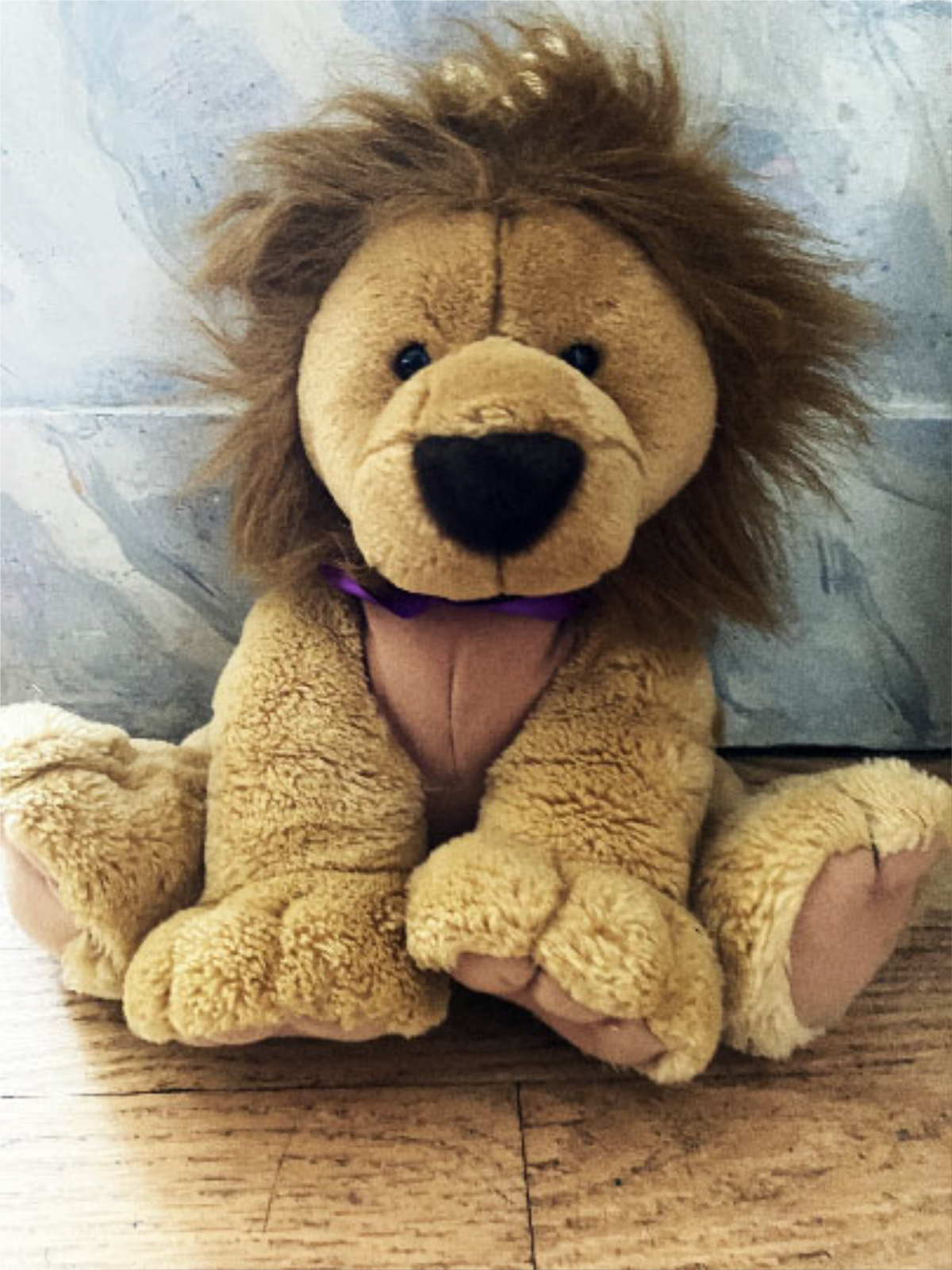
A few minutes later I stand over her. A single window bringing some light reflecting off a brick wall. Her crib is in a small, crowded storage room, filled with boxes and medical equipment.
For a minute I watch her uneven breathing. Her eyes are closed. I sense her little life has something she wishes to say.
It’s as if she is raising her fist, her tiny spirit proclaiming, “I will not accept your verdict on my dying time. I am here. For this moment. Now. For this moment I live!”
I make the sign of the cross. Then, slip quietly out of the room. Late that afternoon, I return. I walk to the storage room and stand in its doorway. Rebecca Ann is gone. Returning to the nurse’s station I ask if I could see her medical chart.
There are no comments on Rebecca Ann’s chart. Only the following in cursive hand writing: “Patient expired. 3:21 P.M.”
ON THE HORIZON
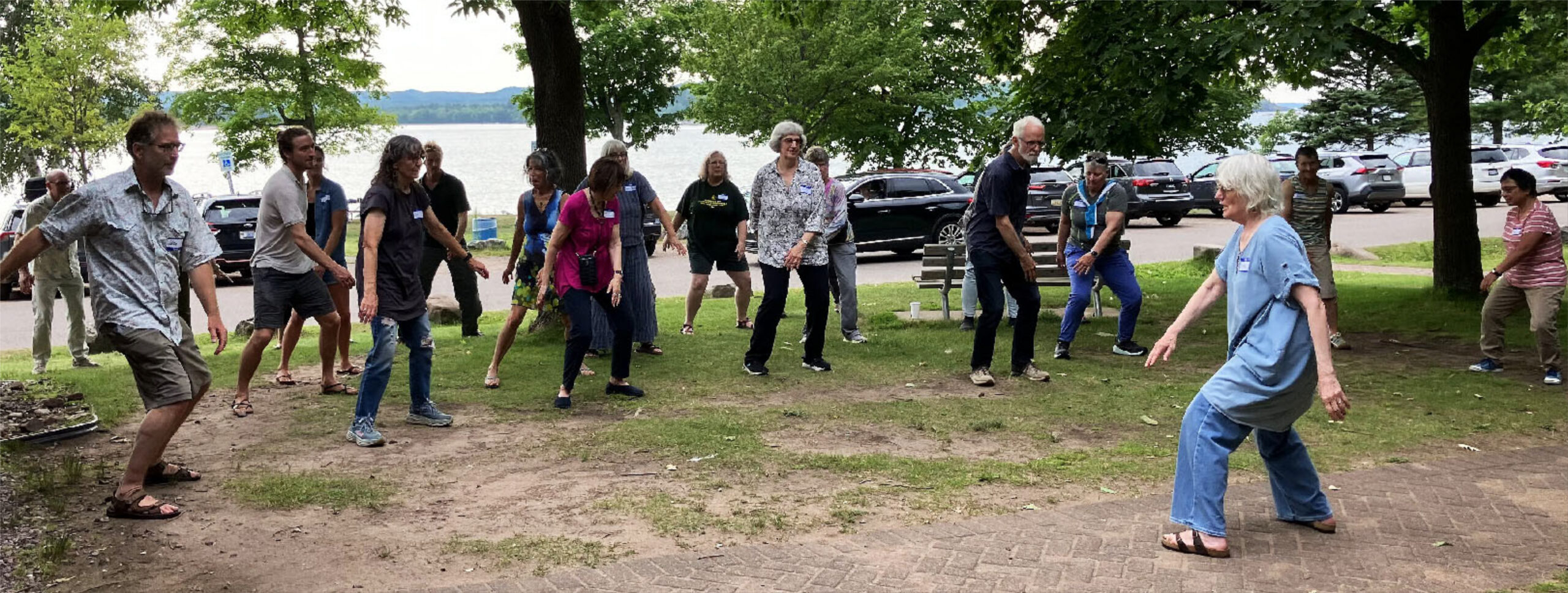
TAI CHI AND QI GONG
For Health and Wellness
On-site: Wednesdays 5:30 – 5:3 P.M.
Monthly workshops with a healthy brunch: 9:30-12 noon.
Morgan Chapel, St. Paul’s Episcopal Church, Marquette
ZOOM SERIES: Mind/Body Practices and Wellness: “The Iron Butterfly”
COMING HOME
Public Presentation
“The Other Side: A Study on Experiences at the End of Life.” Natalia Leonovitch, New York University
Messiah Lutheran Church, Marquette
7 P.M. Wednesday, November 11
A partnership with Michigan State University’s College of Human Medicine
GRANTS AND PROJECTS (2027)
Currently in design and proposal stages
Mind/body skill-building workshops for staff and residents of Marquette’s Homeless Shelter, Transitional Communities, Pathways Mental Health, and Great Lakes Recovery Centers.
Our retreats focus on mental health and leadership styles for nonprofit organizations.
RETREATS
“Passages: Aging and the Challenges of Spiritual Life” (TBS)
“The Way of the Dream” (TBS)
Publication Notice
In January, 2027, “Journey: A Pilgrimage Across Time, Space, and Culture” will become available via the Cedar Tree Institute website. This small, hardback volume consists of a collection of interviews and conversations with Nanda Raj Shrestha, who, in 1972, traveled from the mountains of Nepal to Minnesota to begin a life in the United States. It documents his journey from a village in the Himalayas to his citizenship in a new country, his life as a father, husband, and a career as a university professor.
An honest, no-holds-barred examination of cultural conflict, personal struggle, and spiritual life. These transcribed conversations took place in 2024 between Nanda and the CTI Director, who served in 1967-69 as Peace Corps Volunteer in Nepal.
The Cedar Tree Institute, as a nonprofit organization, carries on its work quietly, thanks to individual donations. We have no full-time employees. One-third of our programming is offered pro-bono to the community. Our appreciation to those of you who continue to help us on our way!
CTI BOARD
- Jon Magnuson, CTI Executive Director
- Steve Mattson, Financial Consultant
- Jim Elder, Attorney
ADVISORY COUNCIL
- Larry Skendzel, Physician, Hospice Care
- Gareth Zellmer, Consultant, Trainer
- Ken Kelley, Professor Emeritus, NMU
- Rick Pietila, U.S. State Department
- Jan Schultz, Botanist, USFS, Retired
- Michael Grossman, Family Physician
RESEARCH ASSOCIATES
- John Rosenberg
- Ruth Almén
- Joseph Piccione
- Kent Fish
For information contact us at 403 East Michigan Street, Marquette, MI 49855 or contact us via email. Telephone & Fax: 906-228-5494
The Fall 2026 Ecotone Newsletter is brought to you by Cedar Tree Institute.


