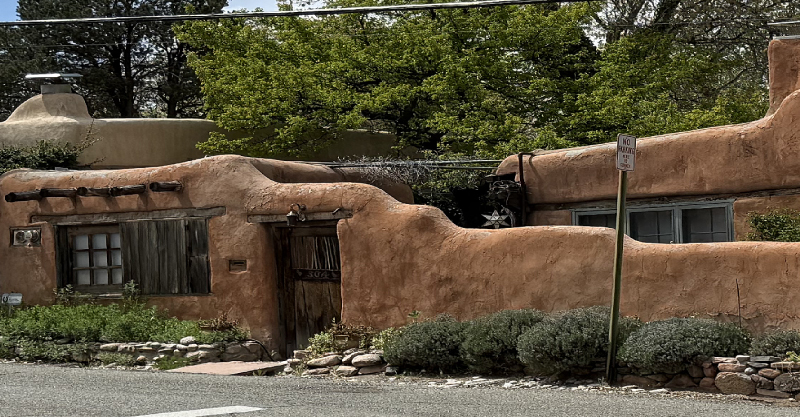
Over the Western rim of the Sangre de Cristo Mountain Range sits the fabled city of Santa Fe. With its rich history, adobe architecture, and galleries, it’s known to many art enthusiasts as the “Paris of North America.” Symphony tickets go there for $300. During peak tourist season, a night at the La Fonda Hotel can run $1,000.
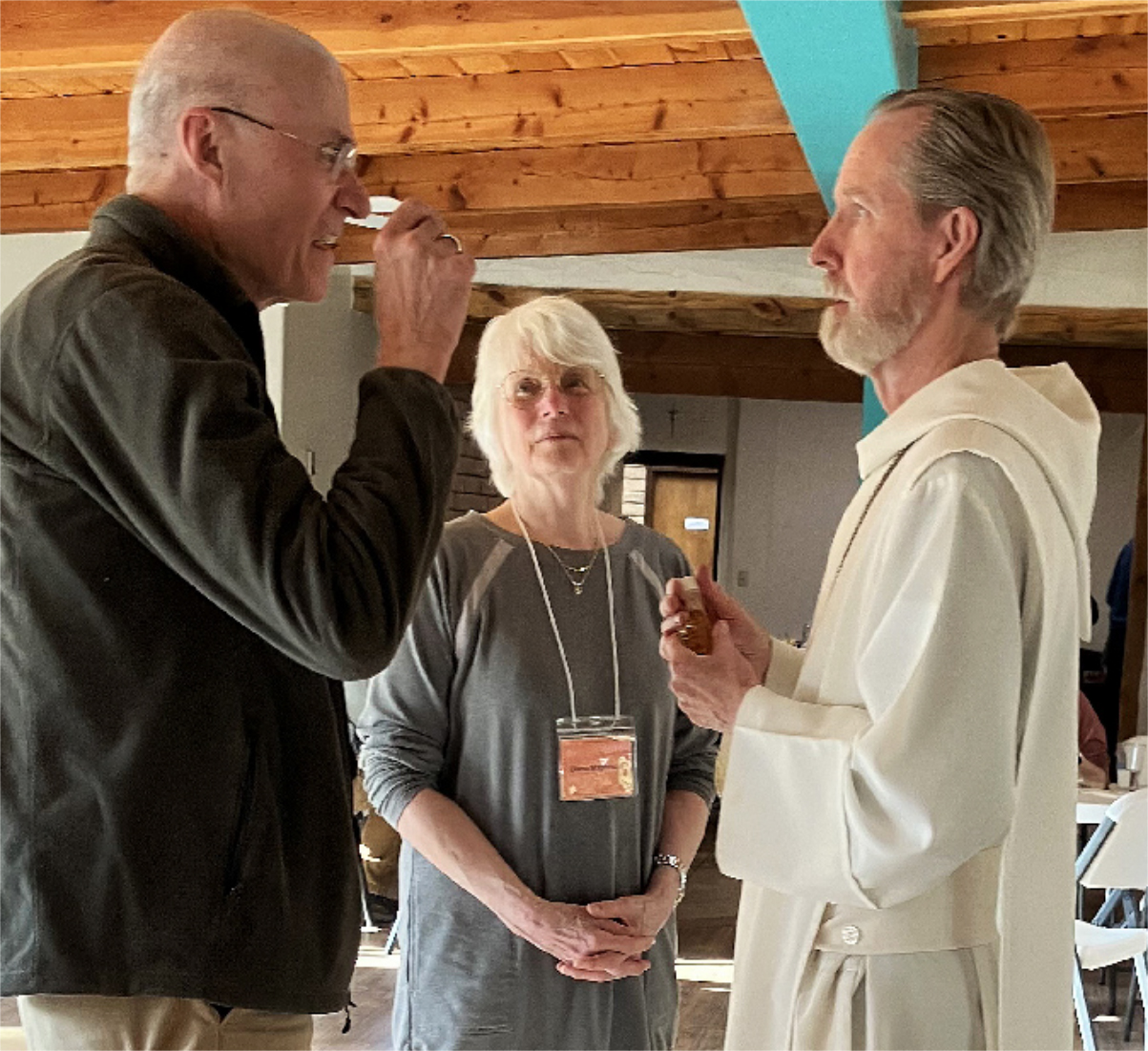
Here on the East side of the mountains, a couple dozen of us have gathered at a Benedictine monastery for a three-day retreat. We’ve come to explore the spiritual life. This site consists of a few modest buildings. It’s overseen by six monks who have dedicated themselves to a life of poverty, prayer, and hospitality to strangers.
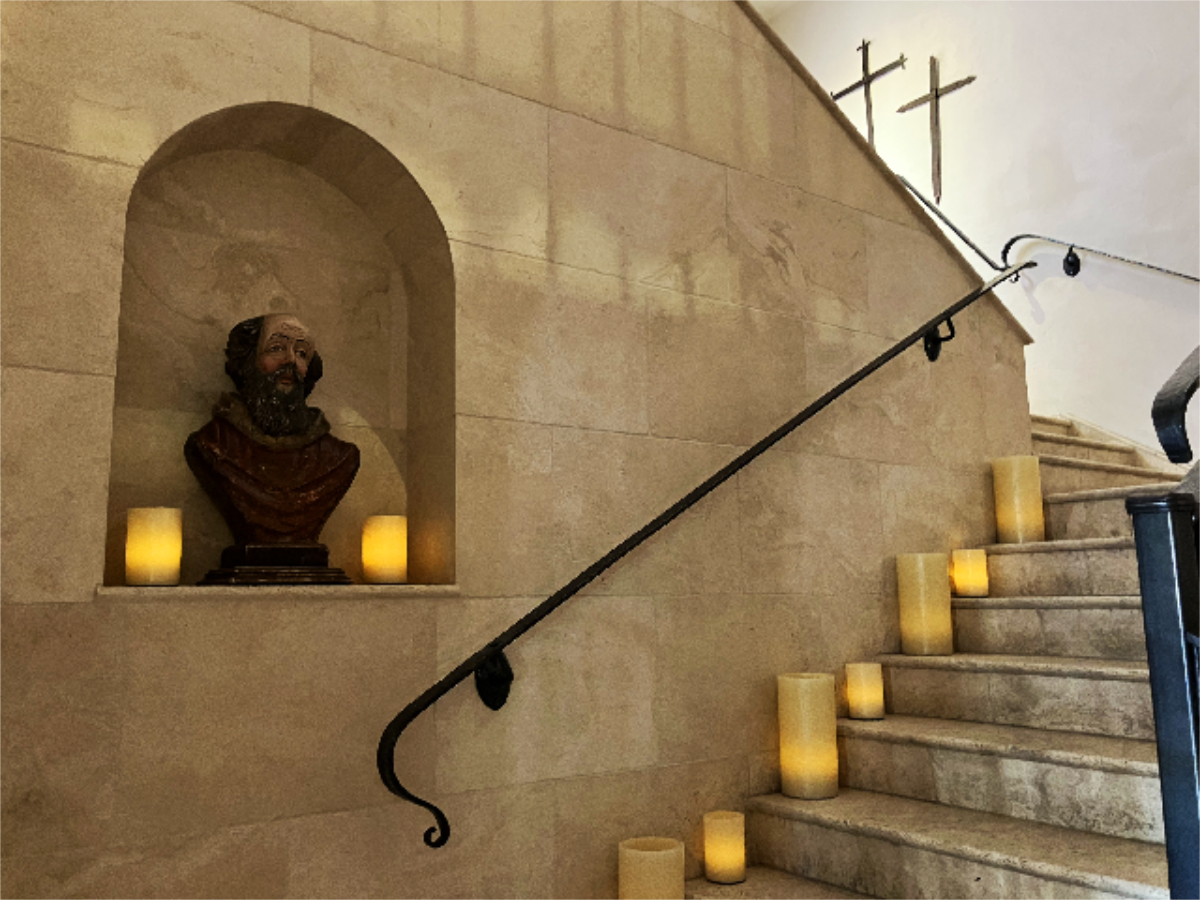
It’s the last morning of the retreat. A handful of our group choose to join the monks for their weekly Mass. Most days, daily morning rites like this one, draw but three or four visitors. Winding myself down a narrow hallway, approaching the small chapel, I’m startled. The room is filled. I remember it’s Sunday. I find a place to stand, inside the door, of to one side.
A middle-aged Hispanic man is playing a guitar. His voice full, strong. I become aware that hymns during this service all have at least a portion of their lyrics sung in Spanish. The Abbot leads the centuries-old liturgy with a respectful, gentle intention. Those who fill the chapel this morning come from the nearby rural countryside. Of Mexican descent, men wear jeans and plaid shirts. Some walk with canes. Many women wear shawls. Their hands are worn and rough from working fields and orchards.
In Roman Catholic tradition, this sharing of bread and wine, the Sacrament, serves as the heart of the Mass. Hymns of thanks and hope are sung by members of congregation. Individuals walk in single file up to a wooden altar. The Abbot blesses each of them, then places a small communion wafer of unleavened bread in their hands.
This morning, our country’s media is quoting the President of the United States, commander of the most sophisticated, lethal military on the planet. He announces that if a certain Middle East country bordering the Straits of Hormuz, refuses to surrender unconditionally by Tuesday evening, he will bomb it into the stone age.
A young girl approaches the Abbot. She appears to be eight or nine years of age. She wears a simple dress. I cannot see her face. She has a kerchief covering her head. Accompanied by her mother. She stretches out her hand. She bows her head.

Winter 2026 Ecotone Newsletter
CONTENTS
JOURNAL NOTES
Thanks to Denise Dufek who, upon invitation of Greg Toutant, worked with the CTI Director debriefing a critical incident with staff members of the Great Lakes Recovery Centers. In December, together we processed the death of a resident at a GLRC facility.
Our appreciation to Barb Ojibway, Ken Kelly, Will Sharp, and Sarah Gimpf who, this March, led three CTI workshops exploring “The Way of the Dream.” This series was sponsored in partnership with The Episcopal Diocese of Northern Michigan and the Northern Great Lakes Synod of the ELCA (Lutheran Church). Initially offered to support clergy and priests, we opened it to the wider community.
Jeff and Cindy Noble recently returned from Switzerland after a visit with their son who is working with a family serving as staff at an international school.
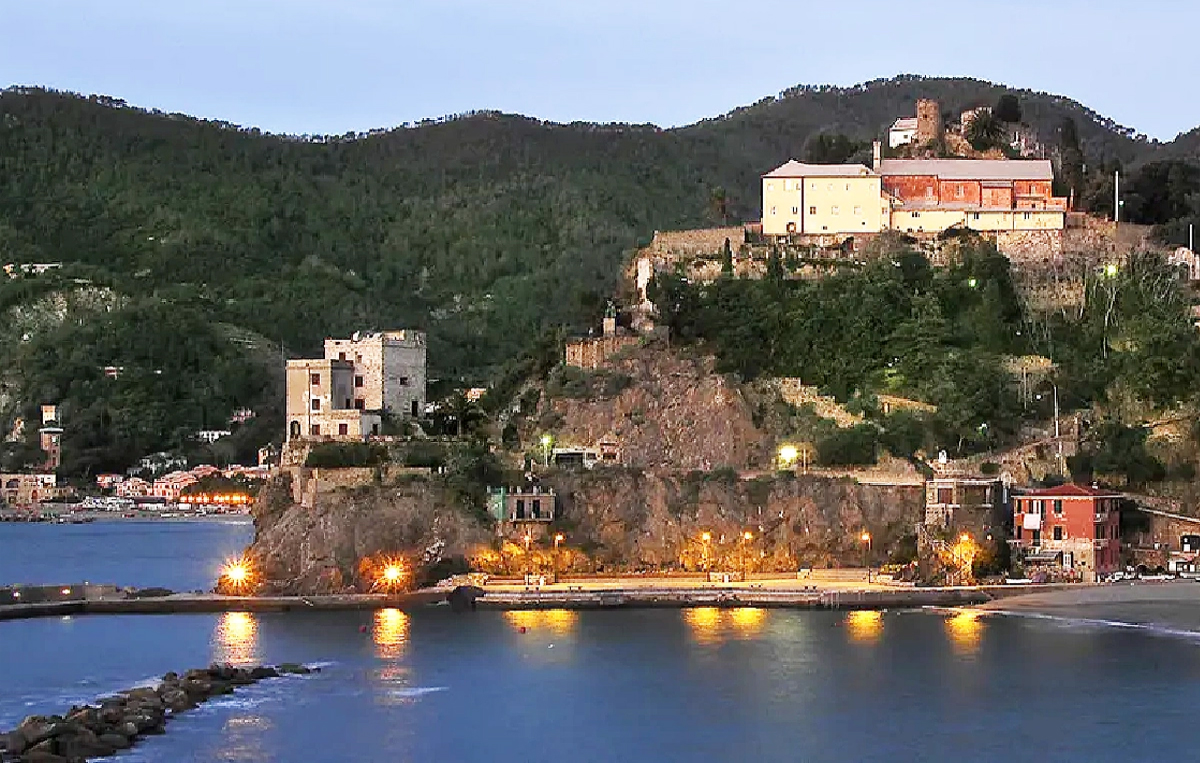
Jeff carried a sprig of Northern white cedar and a financial donation from the Cedar Tree Institute. He placed the gifts one early dawn during Easter week in the chapel of a Capuchin monastery high in the Italian alps.
Jeff is a retired forester and wildland firefighter. He continues volunteer work with us coordinating our ongoing tree planting initiative here in the Northern Great Lakes Basin. Along with the gifts, he left a note asking that the Capuchin monks say a Rosary lifting up the work of the Cedar Tree institute, “and all who labor to protect the Creation.”
Over the last 18 months, in partnership with Unity Yoga, Be Well, and Meditate Marquette, CTI assisted in facilitating a weekly meditation group (The 4 Cs) at Marquette’s Peter White Library. Will Sharp, Craig Kitchen, and Makari Rising represented CTI in leading several of those sessions.
Our gratitude to Deb Smith and Jenn Piccard for their visionary leadership with this gift to community.
THE SPIRITUAL BRAIN
In April in New Mexico, 27 of us from different walks of life gathered for a Cedar Tree retreat. Presenters for “The Spiritual Brain” included Greg Fricchione, a psychiatrist from Harvard Medical School, Mike Grossman and Larry Skendzel, both hospice medical directors from the Midwest, and Lilly Burchfeld, who shared research from studies in Stockholm and on the neuroscience of spiritual experiences.
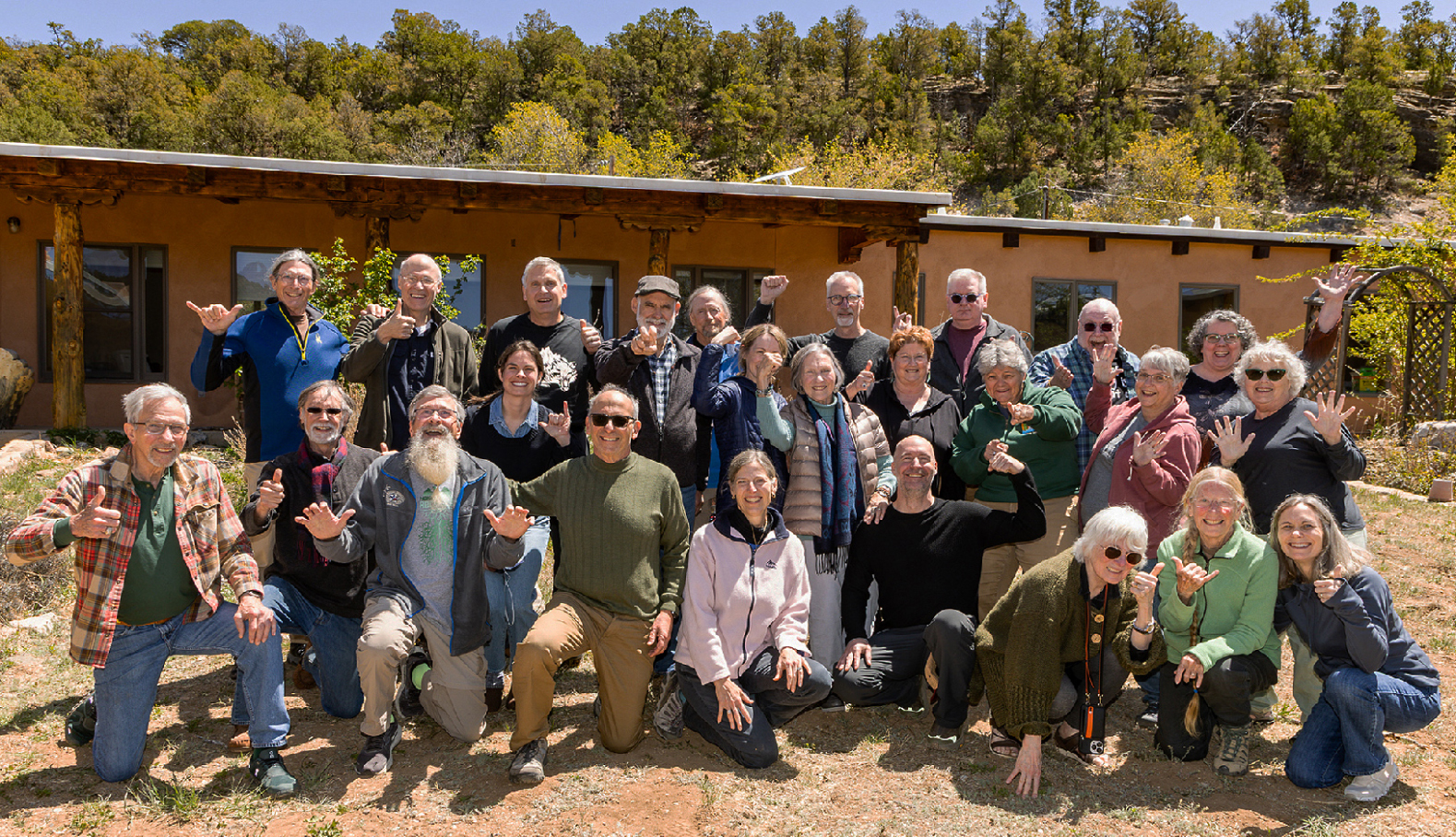
Our gratitude to Melanie Mottinger who provided award-winning healthy meals during our experience together and to Diana Magnuson who served as our retreat’s early morning Tai Chi instructor. To CTI volunteers Kent Fish and Ruth Almén, you made it happen (once again) with grace, hospitality and logistic expertise! To John Rosenberg and Joe Piccione, CTI Research Associates, the spirit of your creativity and insights danced with us .
HEALING THE EARTH
A HEALING EARTH INITIATIVE
1,000 Trees!
The Cedar Tree Institute in Partnership with U.P. Wild Church is planting 1,000 Northern white cedar trees on public lands that need restoration and healing. Many thanks to the Yellow Dog Watershed Preserve, Messiah Lutheran Church, First Presbyterian Church in Big Bay and volunteers from the wider community for making this happen!
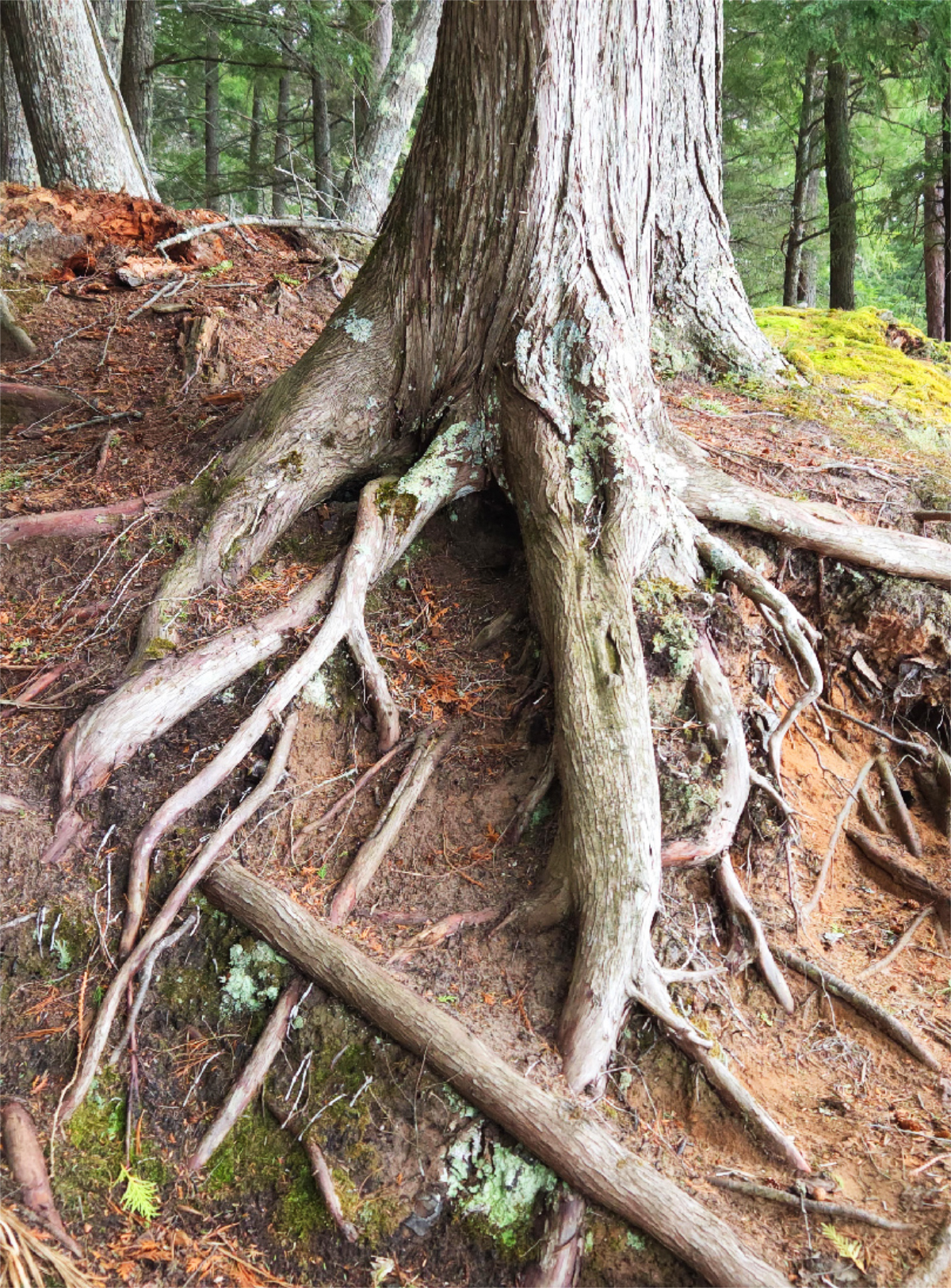
TREE PLANTING DATES
Saturday Mornings: June 20 and July 18
Contact Judy Krause if you can join us!
judykrause70@gmail.com, (906) 362-6679
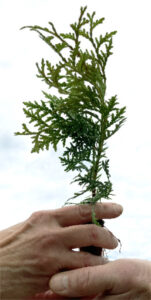
Meet at Marquette’s Messiah Lutheran Church
Front parking Lot 8:45 A.M.
We will carpool to Big Bay and be hosted by the
First Presbyterian Church
Returning at 1 P.M.
Dress for the weather. Rain or shine!
BLESSING OF THE TREES
A benefit concert with Michael Waite
Reflections by Jeff Noble and Lanni Lantto
June 18th, 7 P.M.
Messiah Lutheran Church
305 West Magnetic, Marquette
THE CIRCLE
From an unpublished collection of reflections written by CTI’s Director.
The United States Congress selected the Bald Eagle as the national emblem in 1782. There are now over 6,000 nesting pairs. Their future, however, remains precarious.
Jason’s father, an officer in the Air Force, traveled with his family across North America and Europe serving at North American Treaty Organization (NATO) bases. Like most children of military personnel, their son and daughter learned to navigate such moves.
As a youth, Jason connected with the Boy Scouts of America. That organization provided a bridge into new communities, offered identity, while embedding in him high levels of social skills for life’s transitions. I grew to know Jason during my work as a university chaplain. We met when he was a nineteen-year-old college freshman at Northern Michigan University. Not surprisingly, I discovered Jason had hopes of working, one day, as a Boy Scout executive. Like most young adults, during those years he was a joyous, beloved, bundle of contradictions and gifted with an extraordinary singing voice. He once sang a hymn on a Sunday morning as soloist at a rural church. I watched grown men cry.
During early teens. Jason was inducted into Scouting’s Order of the Arrow. Voted by members for valuable leadership training.
This involved, during meetings, to hold a respectful integration of selected American Indian symbols and rituals. Because of this past experience and classes with the University’s Native American Studies, Jason was invited to be part of a local Native group, the Teal Lake Drummers.
During university pow-wows, the gymnasium dancing floor was strewn with fresh cedar. Jason sat among a circle of heavy-set Ojibway men in their twenties, most with braids and baseball caps around a large drum. He’d raise, then drop his leather wrapped drum stick with them in syncopated rhythm. Teenagers from tribal reservations, dressed in ribbon shirts and shawls, held up recorders to capture songs, later to be played on iPods and car stereos.
One evening Jason asked if I knew someone in the local Native community who could teach him about the significance of eagle feathers. I shared an experience from my past experience in the Pacific Northwest.
Years earlier, I saw a hundred dancers at a powwow in a crowded Seattle conference center come to a sudden halt. A single eagle feather had fallen on the dance floor. Silence swept the auditorium. A Yakima tribal elder, leaning on a cane, dressed in blue jeans and a beaded leather vest, was escorted from the bleachers. In the stillness, he placed, ever so carefully, the feather back on the dancer’s staff.
I told him that most Americans are not aware that feathers, bones, and other parts of Bald Eagles are protected from use or display by non-native peoples by the Bald Eagle Protection Act (1940) and the Freedom of American Indian Religion Act (1978). That Eagle feathers are reserved for use in ceremonies carried out by members of American Indian tribes across North America and Alaska. Bones and feathers held by non-natives, not documented as gifts, can be confiscated. If not authorized for possession of such items, one can be subjected to fines and jail time. Jason was not familiar with this information.
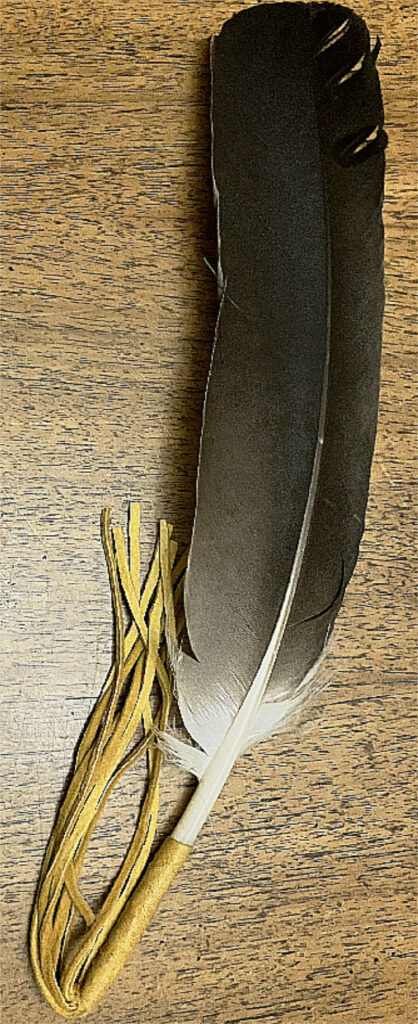
The next afternoon he brought me a small, rectangular, fat cardboard box. Inside was a Bald Eagle feather. The feather was eighteen inches long, three inches at its widest dimension. Glistening white, its tapered head was topped with a swatch of black. It was obvious, he had cherished and carefully preserved it. The feather’s beauty radiated a peculiar energy. I felt it was trying to speak, to find a voice. I chose, of course, to say nothing of this.
Jason told me he’d found the feather during a Boy Scout canoe trip, years earlier, on the Gunflint Trail, a series of lakes and rivers weaving through a wilderness area in Northern Minnesota. He said he hoped he could learn how to care for it. He asked if I knew someone who might help him.
I sent him to a friend of mine, Mike, a member of the Keweenaw Bay Indian community, a former proprietor of a local pizza café, now a licensed mental health counselor, then a part-time high school tutor. Mike is a craftsman, a gifted artist to whom traditional teachings were passed down from his uncle and grandfather. Mike lived, at that time, with his wife and three children in a modest home on Alger Street. Its porch crowded with bicycle parts and willow branches with which he fashioned dream catchers.
I told Jason there was one thing he needed to remember. “Bring some tobacco. It’s a sign of respect for the Native spiritual world. It’ll show Mike that you understand that when one approaches to discuss spiritual matters in his tradition, you show a sense of humility. Bring just enough to fll the palm of your hand.” Jason nodded but asked no further questions.
A few days later, Jason called me. Said there was trouble. He asked if we could meet. We met for a conversation, this time at my home.
He reported he had approached my Native friend. They met on Mike’s front porch on an afternoon. Jason continued, “It didn’t go well.”
I asked, “Did you bring the tobacco?” He replied, “No. I thought it a bit strange. I figured it wouldn’t matter.” He looked down paused, then continued, “He asked me if you had told me about the custom of the tobacco. I said yes. Then asked why I didn’t honor what you’d told me. I was, of course, embarrassed.”
Jason continued. “After the awkwardness of that initial conversation, we had a good talk. I learned a lot but was ashamed I had not honored that initial meeting with appropriate respect. I thought about it overnight. For years, I’ve carried this unsettling feeling that the feather I found wasn’t mine to keep. The next afternoon I returned to his home. I gave him the eagle feather as a gift.”
Jason’s feelings of remorse and subsequent decision to honor the spiritual world of Native peoples resonated with me. I’ve made plenty of my own cross-cultural mistakes working with tribal leaders while teaching in university settings. In this instance, that same night I revisited some writings by Marie Van Franz, a Jungian analyst who lived most of her life in the hills above Zurich, cutting wood for her stove, carrying her water from a well. She wrote prolifically about the intersection of spiritual and natural worlds. Steeped in studies of myth, fascinated by archetypes, she came to believe that feathers among indigenous people around the globe carried a purpose, and still do, in ceremonies for many Native peoples. She believed that although human communities are destined to live within the brutal forces of the natural world, we are also spiritual creatures. She recognized a tension. Van Franz believed that feathers among indigenous people around the globe carried special purpose.
Feathers, accordingly, are gifts from creatures who live between heaven and earth. They serve as signs of our distinctive, transcendent identity. They remind us we are more than flesh and bone. That we are more than the result of survival of the fittest. We carry within ourselves spiritual sensibilities. Gifts given to help us find a rightful place in the larger circle of life.
Four years passed. Jason completed his university studies. In a tough, down-turned economy, he was lucky. He found a position as an executive with the Boy Scouts near Grand Rapids. During this time, he also became engaged and married.
Several more years passed. Then, one early October evening, I received a telephone call from a colleague, a local funeral home director, Mark. On certain occasions, he invites me, as an ordained clergy, to officiate at memorial services.
I make a priority to be open to his calls. Over years, I’ve been present as he and his staff have buried bishops and homeless transients, each with respectful, attentive care. No one is turned away. I wasn’t surprised when he said, “I’ve got an unusually sensitive situation here.”
He continued. “For a couple of days, I’ve been trying to find someone who would be willing to lead funeral services for M.Z. who died of cancer. She grew up Roman Catholic. She’s Native American, spent her youth on a Reservation. For the last sixteen years she’s been living with her same-sex lover. I thought I could find a liberal priest, a few hours away, who might consider officiating. Just found out he’s out of town.”
Mark continued. “What makes things touchy is I’ve just become aware that’s she’s been cut of from any relationship with her family members. Little, if any, contact. I’ve learned the family is driving over for the funeral. They’re Indians from Minnesota. From what I surmise, traditional people. It’s been my understanding there’s been plenty of tension between M.Z. and certain members of her community regarding choices she’s made. I don’t believe there’s been much if any communication between her and her family in the last past couple of years.”
I told Mark I’d be glad to lead the service. I called my friend Mike, my neighbor on Alger Street. I inquired whether or not he’d be interested, or able to assist in the service. I asked if he could greet the community with words from M. Z.’s Native language. Just learned they were coming from the Fond du Lac Reservation. Without hesitation he replied, “Of course. I’ll be there.”
The next day was overcast. Temperature in the 40s. It had been raining for several days. Our Michigan forest-lined highways were slick. Sky overcast. That afternoon, Mike and I entered the funeral home where the service was to take place. There was a cold, tight tension in the room. Seven family members and friends of M.Z.’s family arrived from Fond du Lac. Stone-faced, they sat in the first two rows of folding chairs in front of the coffin. M.Z.’s partner and a group of 20 friends, all women, were seated toward the back of the room. Four empty rows of chairs separated the two groups. Mike stood next to me in a traditional ribbon shirt. I opened with a few words. Mike welcomed the gathering in their traditional language. The Minnesota guests nodded their heads in surprise.
The funeral service unfolded with a simple format. A burning of a small handful of cedar and sage, a prayer, a reading of the 23rd Psalm. The community was then invited to share any thoughts they might have. M.Z.’s partner spoke first, followed by two or three friends who had surrounded the couple over these last years.
Together we sang a simple hymn. Mike shared a few thoughts. Again in his Native language to honor M.Z.’s family. When he was finished, I looked at the mother, and asked if she wished to speak. She rose and turned to those gathered behind her, those who she believed had isolated her daughter from the community of her childhood. She spoke softly, but directly.
“I want to thank all of you who came here today. We don’t know any of you. But thank you. For being part of my daughter’s life in the years she’s been apart from us.” She sat down. Her eyes filled with tears. I turned to the rest of the Fond du Lac delegation, inviting anyone else who might wish to speak. They stared ahead with no expression.
It was time for the benediction. I turned again to Mike to close with words in the Ojibwe language. I moved aside, he stepped forward. This time, he held an eagle feather in his hand. I recognized it immediately. It was the feather that Jason had given to Mike years before.
Mike, descendant of the Ojibway Bear Clan, walked over to M.Z.’s mother, whispered in her ear. She nodded, then reached out her hands. He laid the feather gently in them.
The service concluded. The Fond du Lac delegation did not linger. A seven-hour drive West. The weather waited. They silently slipped away.
I packed up my Book of Occasional Prayers along with a small pouch of cedar I brought to the memorial. I tuned to the coffin, remembering Mike’s gift to the grieving mother.
I recalled asking Jason, years earlier, about the location of the feather when he first found it. “On his canoe trip,” he said, “Northern Minnesota.”
Later, that evening, I looked at a map and traced with my fingers the lines marking boundaries for the Fond Du Lac Reservation. An Internet search listed 4,000 tribal members, 3,500 acres, established by the Treaty of 1847.
The next morning, I made a telephone call to Minnesota’s Department of Natural Resources. I asked three questions. The DNR employee said he’d contact their wildlife biologist.
That same afternoon a message was left on my phone’s voice mail. “The Bald Eagle’s fight range is approximately 100 miles. Yes, we’ve identified several pairs within boundaries of the Fond Du Lac Indian Reservation. “And yes,” the recorded message said, “Their nesting range is well within fight range of the Gunflint trail.”
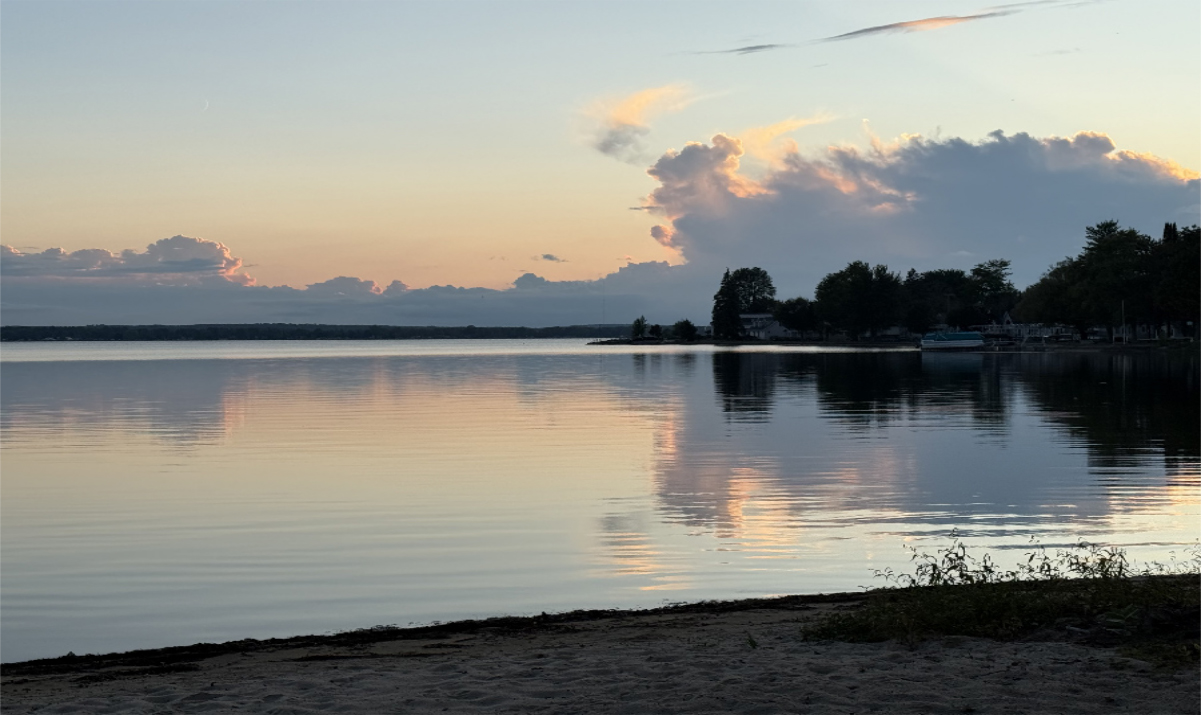
COMING HOME
2026 SUPPORT
For Hospice, Palliative Care Providers and Volunteers in Rural Northern Michigan
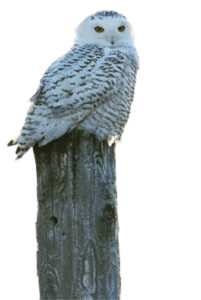
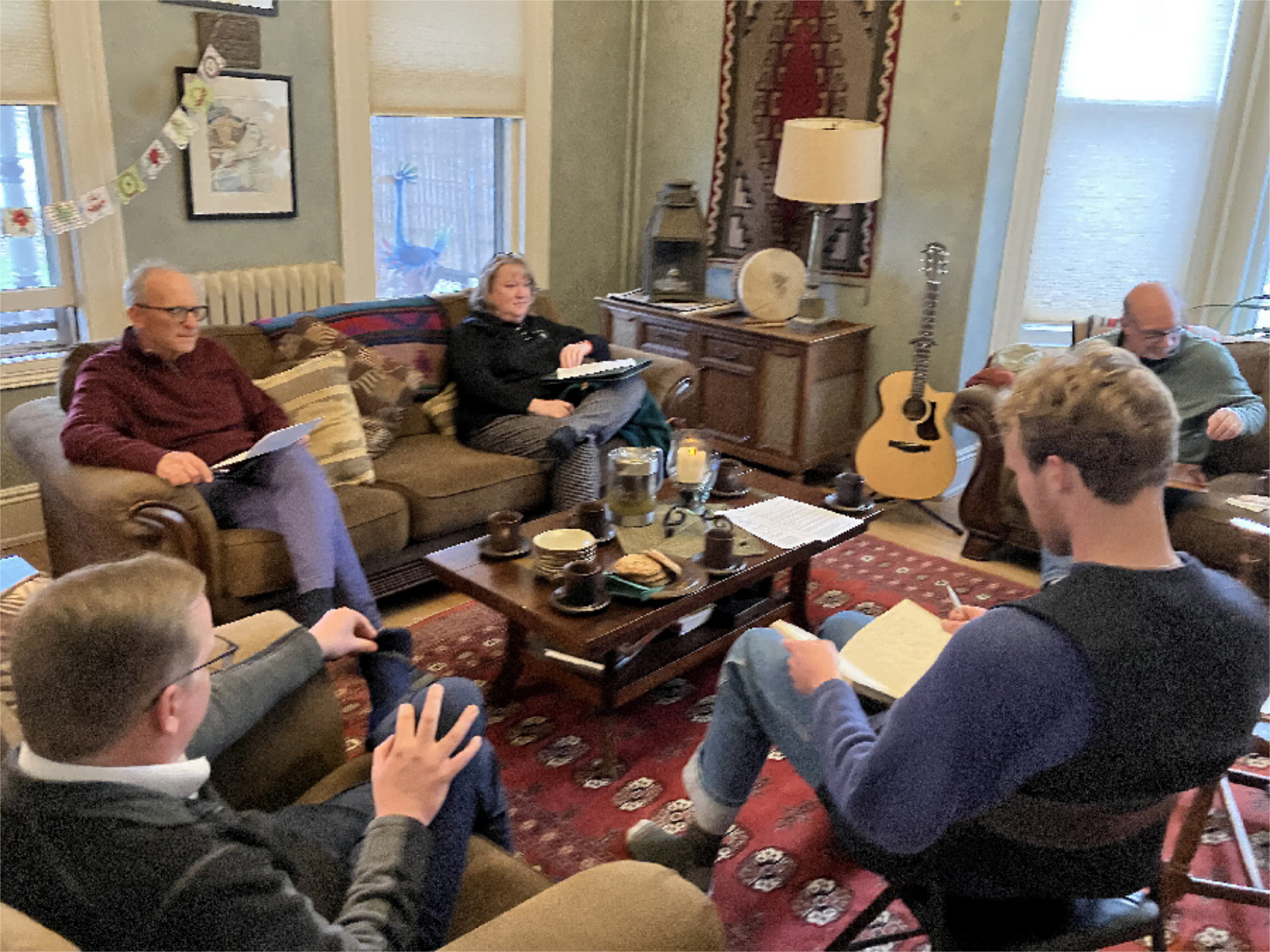
An eight month project consisting of four retreats, public presentations, and consultations. Our goal is to bring together medical providers from 13 regional hospice agencies.
Thanks to the leadership of physicians Stuart Johnson and Mike Grossman, and support of Blue Cross and Blue Shield Michigan Foundation, this initiative provides “on-the-ground” opportunities for building skills for rural medical providers.
The first of the Project’s four public presentations took place on March with Sophina Calderon, Native American physician from the Keweenaw Bay Indian Community.
April Lindala, member of Six Nations and faculty member with NMU’s Native American Studies, opened the evening with a blessing song. An eagle whistle sounded outside the center before Dr. Calderon’s presentation. An audience member drew our attention to a snowy owl that quietly arrived when we first gathered. It sat upon a light post through the evening. In Anishinaabe tradition, the snowy owl is a messenger from the Other World, beckoning us into mysteries.
The next guest resource for this project will be Larry Skendzel, hospice medical director. Larry will join us for the second community event on June 10th, 7 P.M. at Messiah Lutheran Church. He will speak on“What Love Says: Living Well with Serious Illness.”
On September 16th, Greg Fricchione, a psychiatrist from Boston, will join us with the Project’s third public presentation on “Tributaries of Grief.” Greg is the Director of the Benson Henry Mind Body Institute and a member of the Harvard Medical School faculty.
Learn more about The Coming Home Project
PASSAGES
Pauline Kiltinen 1942 – 2026
Both Pauline and John Kiltinen, along with their son Eric, have served as long-time supporters for many community nonprofit organizations. A former teacher, Pauline was a musician and composer of many hymns –a servant in so many ways. Modest. Insightful. Her legacy is shaped by what many experienced as an immeasurable spirit of generosity.
Walter Lee Loope 1947 – 2026
A research ecologist and resource management specialist, Walt was instrumental in gaining the landmark designation of the Grand Sable Dunes as a Natural Research Area. He served with the U.S. Geological Survey and was deeply committed to a deeper understanding of glacial retreat, Lake Superior level changes, and the role of dunes over millennia. He and his wife Lora have long provided encouragement and support for CTI.
Marie Louise Price 1953 – 2025
Bill Kinjorski 1962 – 2025
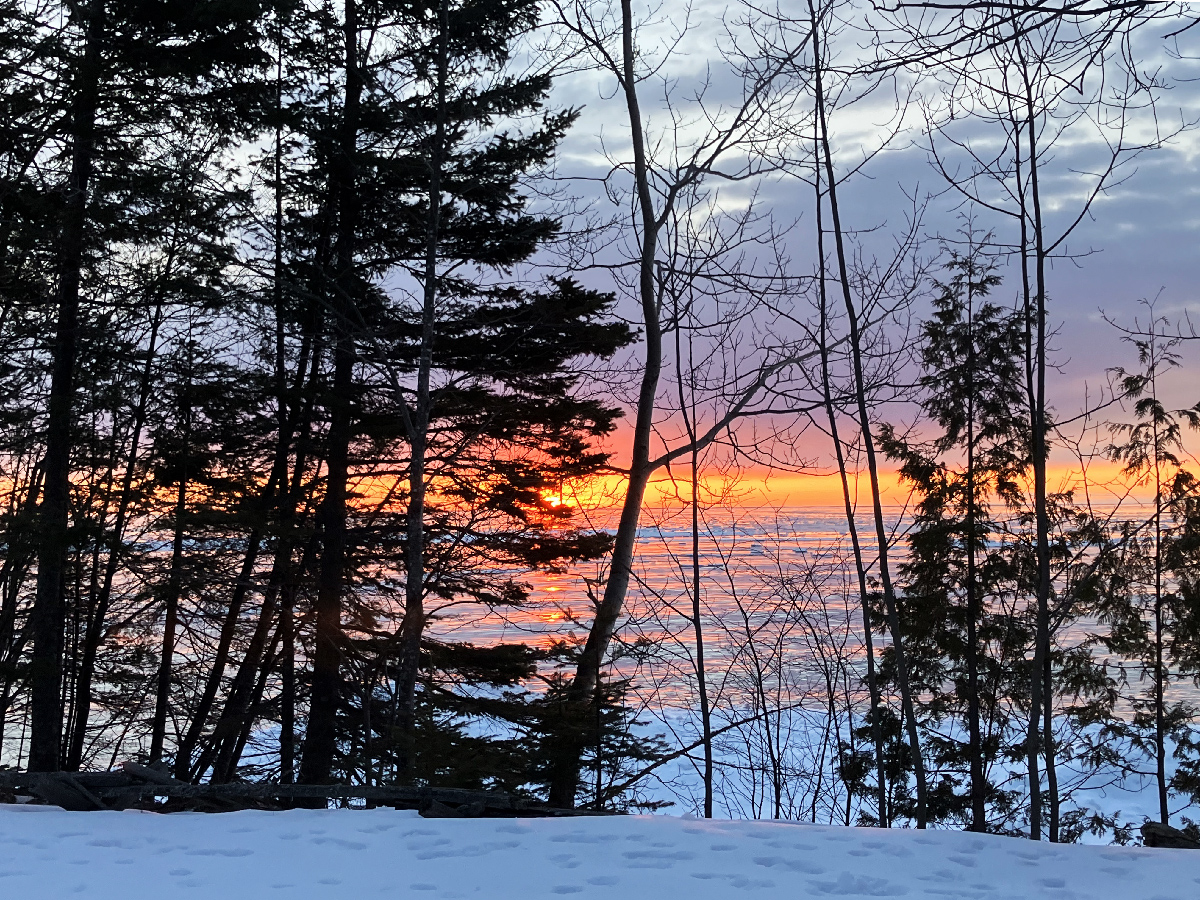
On the first day of May, Kristi Mills and the CTI Director coordinated a memorial service for Marie Louise Price in Big Bay, Michigan. Marie was a long-time resident of Marquette. For many winters, served as a gifted volunteer with Marquette Mountain’s Ski Patrol and worked for over 40 years in administration with Marquette General Hospital. The prior evening, a celebration of life for Bill Kinjorski, Kristi’s long-time partner and proprietor of Big Bay Outfitters, took place at the same lakeshore cabin.
TRANSITIONS
Andrew Ploucher and Molly Hunter, pastors of Messiah Lutheran Church in Marquette, are now in transition to new ventures. For seven years, they provided leadership for the Upper Peninsula’s largest ELCA Lutheran congregation. We thank them for their service.
Ruth Almén, Congregational Operations Officer, for Our Savior’s Church in Arlington Heights, Illinois, is moving forward to a new unfolding chapter in her career as a social worker and leader in the faith community. Ruth continues her long exquisite service as a CTI Research Associate.
ON THE HORIZON 2026
COMING HOME
Public Presentation
“What Love Says: Caregiving at the End of Life”
Lary Skendzel, M.D., Hospice Medical Director.
Messiah Lutheran Church, Marquette
7 P.M. June 10
For more information: Coming Home
THE 2026 EARTH HEALING INITIATIVE
We are planting 1,000 trees to protect and restore public forests
BENEFIT CONCERT
with Michael Waite
Messiah Lutheran Church, Marquette
7 P.M. June 18
For more information: Blessing of Trees
THE 2026 CTI MIDSUMMER FESTIVAL
Presque Isle Park Pavilion, Marquette
Thursday, July 30th, 5 – 6:30 P.M.
IRON AND SILK
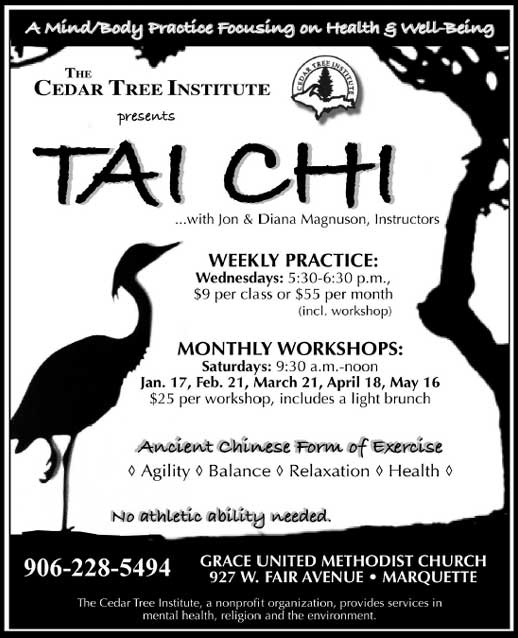
Community Tai Chi Weekly Practice
Wednesdays: June- August 5:30 –5:30 P.M.
Weather permitting
Mattson Park (West End) Pro bono.
Learn more about our weekly Tai Chi practice
TAI CHI CHUAN & QI GONG
FOR HEALTH & WELLNESS
Northern Center for Lifelong Learning
Peter White Public Library (Marquette)
1:30 -3 P.M. August 13
GUEST PREACHING (CTI Director)
Messiah Lutheran Church
May 31st, June 21st, July 19th, August 16th
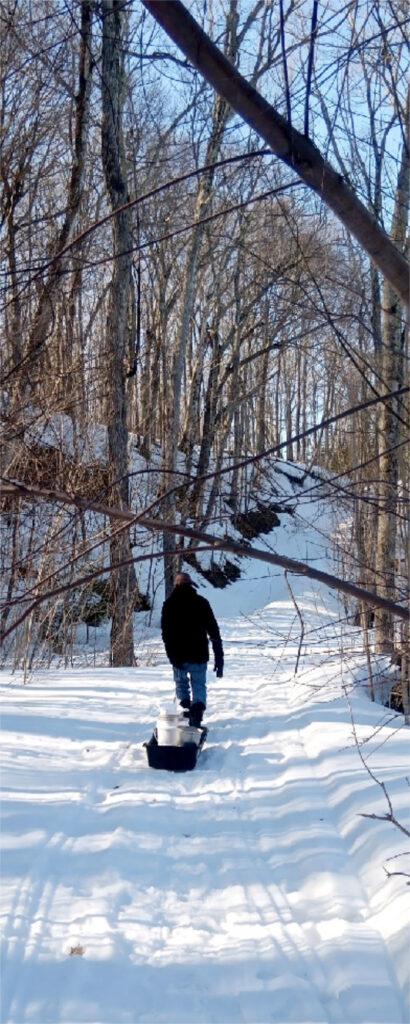
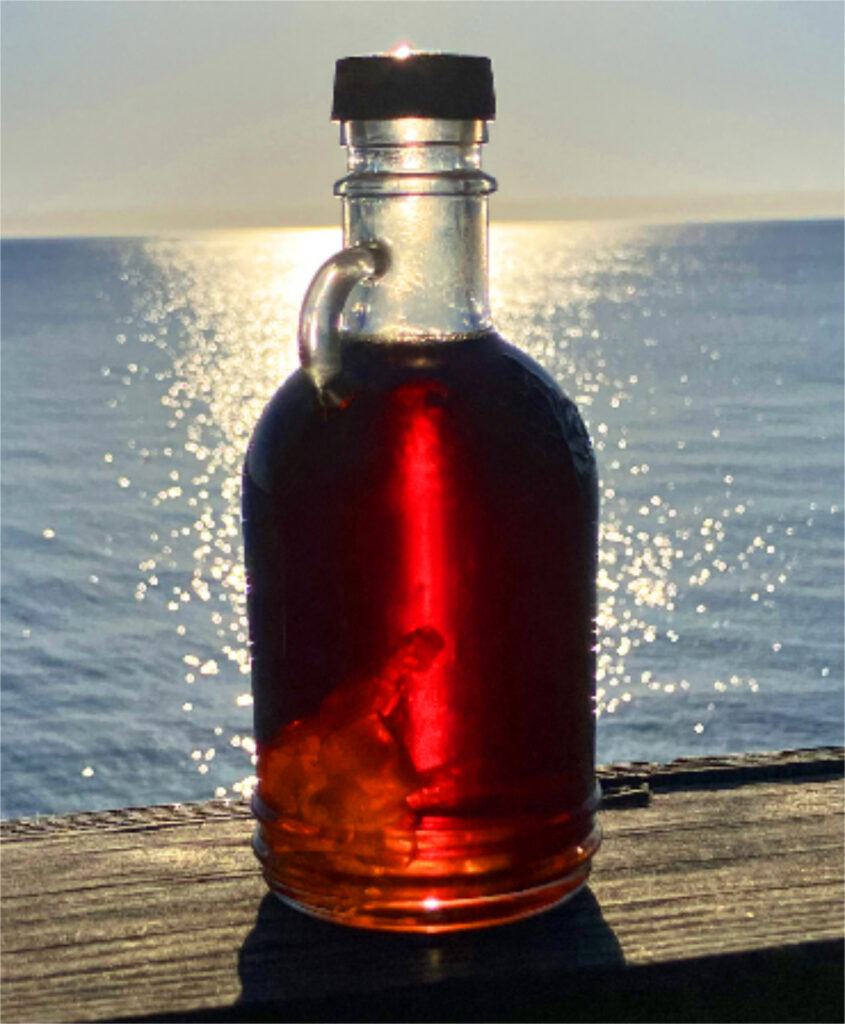
Maple syrup. Gifts of appreciation to be distributed by CTI during 2026
GRATITUDE
Those of us who work with faith-based communities live a paradox. Buddhist monks carry begging bowls as part of their spiritual practice, as a reminder that we all live upon the generosity of others.
Like our Buddhist brothers and sisters, the volunteers who work with CTI know that we carry on with a similar sense of appreciation. Perhaps, at the end of our time on this earth, we will all discover this gift economy is what holds the world together.
Over the last 30 years, bishops, mayors, priests and politicians have come and gone in this corner of the Great Lakes Basin. Since 1995, you, the readers of this newsletter, have chosen to quietly carry us along. We’re still here. Thank you. So very, very much.
CTI BOARD
- Jon Magnuson, CTI Executive Director
- Steve Mattson, Financial Consultant
- Jim Elder, Attorney
ADVISORY COUNCIL
- Larry Skendzel, Physician, Hospice Care
- Gareth Zellmer, Consultant, Trainer
- Ken Kelley, Professor Emeritus, NMU
- Rick Pietila, U.S. State Department
- Jan Schultz, Botanist, USFS, Retired
- Michael Grossman, Family Physician
RESEARCH ASSOCIATES
- John Rosenberg
- Ruth Almén
- Joseph Piccione
- Kent Fish
Thank you for reading the Summer 2026 Ecotone Newsletter, the official Newsletter of the Cedar Tree Institute.